Executive Summary: Recent DOJ unsealings of the “Epstein Files” (2024–2025) reveal a hidden “Cannabis Matrix” within the Jeffrey Epstein investigation. Key findings include a 2002 marijuana arrest that served as the investigation’s original catalyst, a 2015 DEA memo linking suspicious banking transfers to illicit drug patterns, and a controversial 2008 legal defense that used a victim’s interest in “vaporizers” to discredit her. This report explores the intersection of the “War on Drugs,” financial shadow-banking at JP Morgan, and the bipartisan Epstein Files Transparency Act.
The unsealing of the final “Epstein Files” by the Department of Justice (DOJ) in 2024 and 2025 has revealed a reality far more complex than simple celebrity gossip. At the center of this web is a recurring, yet frequently overlooked, theme: The weaponization of marijuana.
From triggering the initial 2002 probe to serving as a “character smear” in federal court, cannabis was the thread that investigators used to pull—and that Jeffrey Epstein’s defense team tried to cut. This investigative deep dive exposes the drug-finance nexus that stayed hidden for decades.
1. The “Marijuana Catalyst”: How a Routine Bust Cracked the Case
It is a historical irony that one of the most significant sex-trafficking investigations in U.S. history began with a routine weed arrest.
In 2002, a young woman detained in Palm Beach for marijuana possession and paraphernalia became the primary whistleblower. During her interrogation, she revealed her proximity to the Epstein residence, identifying herself as his “number one girl.” This testimony provided the Palm Beach Police with the first actionable lead into the predatory patterns that defined Epstein’s operation. Without this “minor” drug bust, the legal dominoes might never have fallen.
2. “Digital Ghosts”: SEO Suppression and the Drug Narrative
The unsealed documents confirm that Epstein was a pioneer of SEO manipulation used to bury negative news. He hired high-end firms to flood the internet with “vanity” content to ensure that any mention of his name alongside “drugs,” “arrests,” or “trafficking” was pushed to the deep pages of Google.
By the time he became a household name, his digital footprint had been scrubbed. Investigative leads were replaced with puff pieces about his “philanthropic” interests in science and finance, a tactic known as reputational laundering.
3. The 2015 DEA Memo: Shadow Banking and Illicit Transfers
While the public focused on the 2008 non-prosecution agreement, a newly unsealed 2015 DEA memo reveals a five-year federal shadow investigation.
- The Conflict: The memo highlights friction between the DEA and the SDNY. While the DEA wanted to pursue Epstein for “illegitimate wire transfers” linked to the illicit drug trade and prostitution, other agencies prioritized different charges.
- The Banking Nexus: The DEA tracked hundreds of Suspicious Activity Reports (SARs) moving through JP Morgan and Deutsche Bank. Recently unsealed records show JP Morgan flagged over $1 billion in suspicious transactions after his death, despite internal warnings as early as 2006. Banks reportedly maintained the accounts because the high-net-worth revenue outweighed the compliance risk.
4. Legal Gaslighting: The 2008 “Vaporizer” Defense
During the high-stakes 2008 legal proceedings that eventually led to Epstein’s controversial non-prosecution agreement, his defense team at Kirkland & Ellis utilized a strategy now viewed as a “junk science” character smear. To argue that a key victim was not a “naive minor” at the time of her encounters with Epstein, attorneys pointed to her 2006–2007 MySpace posts regarding her desire to purchase a cannabis vaporizer.
In the mid-2000s, vaporizers were niche, expensive, and relatively “high-tech” smoking accessories. By highlighting this search, the defense argued that her knowledge of such devices proved a “level of technical maturity” and “street smarts” inconsistent with being a coerced victim. This 2008 tactic—using a minor’s interest in a plant to discredit their testimony—remains one of the most glaring examples of the “character assassination” revealed in the unsealed files.
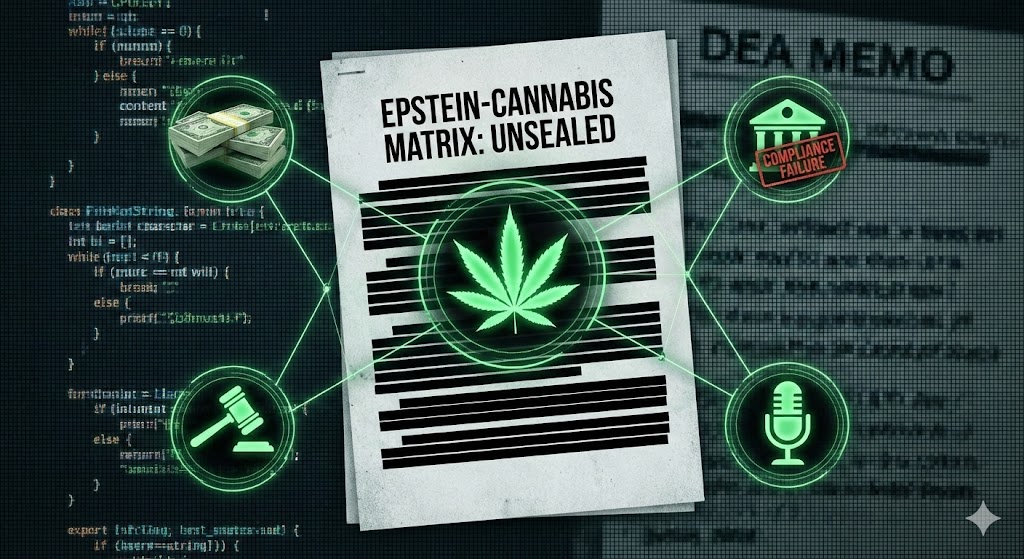
The Epstein-Cannabis Investigation Matrix
| Investigation Pillar | Key Discovery | Institutional Link |
| The Trigger | 2002 Cannabis arrest of key witness | Palm Beach PD / DOJ |
| Financial Crime | 2015 Memo on “drug-pattern” wire transfers | DEA / JP Morgan / Deutsche Bank |
| Legal Defense | MySpace “Vaporizer” character smearing | Kirkland & Ellis |
| Venture Capital | “True Blunt Masters” 2014 business pitch | Legal Weed Industry |
| Transparency | The Epstein Files Transparency Act | Rep. Thomas Massie / Ro Khanna |
5. “True Blunt Masters” and the Business of Weed
Epstein’s role as a “power broker” extended into the early days of the Green Rush. Among the unsealed emails was a 2014 pitch for “True Blunt Masters,” a multimedia branding platform for the legal cannabis industry.
While the files don’t confirm a final investment, they illustrate how industry entrepreneurs viewed Epstein as a viable venture capital source for legitimate marijuana businesses—further blurring the lines between his illicit shadow and his public-facing “investor” persona.
The Push for Total Transparency
In late 2025, the Epstein Files Transparency Act, spearheaded by Rep. Thomas Massie (R-KY) and Ro Khanna (D-CA), forced the release of over 30,000 pages of previously redacted material. As lawmakers continue to review these “digital ghosts,” the cannabis connection remains a vital piece of the puzzle in understanding how Epstein avoided justice for so long.
Frequently Asked Questions (FAQ)
How did a marijuana arrest lead to the Jeffrey Epstein investigation?
In 2002, a woman arrested for marijuana possession in Palm Beach became the first major whistleblower. During her police interview, she detailed her role as Epstein’s “number one girl,” providing the Palm Beach Police Department with the probable cause needed to begin their decades-long sex trafficking probe.
What did the 2015 DEA memo say about Jeffrey Epstein?
The 2015 DEA memo reveals a five-year federal shadow investigation into Epstein’s finances. The DEA flagged “illegitimate wire transfers” through major banks like JP Morgan and Deutsche Bank, which they suspected were tied to both prostitution and illicit drug activities.
What was the “Vaporizer Defense” used by Epstein’s lawyers?
During the 2008 legal proceedings, Epstein’s defense team (Kirkland & Ellis) used a victim’s MySpace posts about wanting a cannabis vaporizer to smear her character. They argued that her knowledge of niche drug technology in 2006 proved she was “too sophisticated” to be an innocent victim.
Did Jeffrey Epstein invest in the legal cannabis industry?
While the files contain a 2014 business pitch for a multimedia cannabis brand called “True Blunt Masters,” there is no confirmed record of Epstein investing. However, the documents show that early legal weed entrepreneurs viewed him as a viable source of venture capital.
What is the Epstein Files Transparency Act?
Spearheaded by Rep. Thomas Massie and Ro Khanna in late 2025, this act forced the declassification of over 30,000 pages of redacted DOJ material. The act was partly fueled by a desire to expose how government agencies utilized drug-related “shadow probes” without bringing formal charges.