As cannabis legalization expands across the United States and the federal government finalizes its historic shift toward Schedule III reclassification, public safety personnel face a complex legal maze. A burning question for law enforcement officials, recruits, and defense attorneys alike is: Can cops smoke weed off duty?
The short answer is: It depends entirely on the state, city, and department where the officer serves.
While recreational and medical cannabis are widely accessible to the public, the rules for law enforcement officers are governed by a fragile, rapidly evolving friction between state labor laws, local police department drug testing policies, and federal firearm mandates.
This comprehensive guide explores the current legal landscape, groundbreaking court precedents, and exactly what off-duty cannabis use looks like for police officers today.
TL;DR: Can Police Officers Use Cannabis Off Duty?
- The Federal Standpoint: Federal law technically classifies any cannabis consumer as an “unlawful user” prohibited from possessing firearms. However, local state courts are starting to challenge how this applies to government-issued duty weapons.
- States with Protections: New Jersey and California lead the nation in shielding police officers from termination over off-duty, lawful cannabis consumption, provided they are not impaired on the clock.
- Jurisdictions with Strict Bans: The federal government (FBI, DEA, ATF) and major municipal departments like the NYPD enforce zero-tolerance bans, utilizing random urine screens for cannabis metabolites.
- Testing Modernization: Progressive agencies are moving away from stale urine tests (which flag historical use) toward oral fluid testing and specialized impairment training to isolate on-duty intoxication.
Why “Can Cops Smoke Weed Off Duty?” Is a Complicated Question
The foundational conflict preventing police officers from enjoying the same recreational cannabis rights as standard citizens comes down to federal preemption.
1. The Federal Gun Control Act Challenge
Under the Federal Gun Control Act of 1968 (18 U.S.C. § 922), individuals who consume controlled substances are deemed “unlawful users” and are federally barred from shipping, transporting, possessing, or receiving firearms and ammunition. Because marijuana remains a controlled substance federally, federal agencies maintain that an officer who uses cannabis cannot legally carry a firearm.
2. The Public Entity / Official Use Loophole
A massive turning point occurred when state courts and civil service commissions began dissecting the public entity exemption within federal gun laws. Under federal statutes, firearm possession restrictions do not apply to weapons or ammunition “issued for the use of the United States or any department or agency thereof or any State or any department, agency, or political subdivision thereof.”
Because a police officer’s weapon is issued by a government entity for official public safety usage, state courts are increasingly ruling that federal gun restrictions do not apply to an officer’s duty sidearm, clearing a path for local protections.
State-by-State Deep Dive: Law Enforcement Cannabis Rules
The legislative approach to off-duty police cannabis use is deeply fragmented across the country.
New Jersey: The Benchmark for Police Rights
New Jersey boasts the most explicit legal protections for law enforcement cannabis consumption under the Cannabis Regulatory, Enforcement Assistance, and Marketplace Modernization Act (CREAMMA).
In May 2026, the Superior Court of New Jersey, Appellate Division, issued a landmark consolidated ruling—including Patten v. Jersey City Police Department and cases involving officers Omar Polanco and Norhan Mansour—affirming that municipal police departments cannot fire officers solely for off-duty, lawful cannabis consumption.
According to the official New Jersey Courts Appellate Division Opinion, the court explicitly rejected the defense that federal gun laws preempt state protections, confirming that department-issued sidearms are exempt from federal restrictions. National advocacy groups like NORML have celebrated this as a foundational precedent establishing that officers can only be disciplined if there is documented proof of on-the-job impairment.
California: Protection via Failure of Carve-Outs
California’s Assembly Bill 2188 (AB 2188) was designed to protect workers from discrimination based on off-the-clock cannabis use. While public safety exemptions caused initial confusion, subsequent legislative efforts to strip police officers of these workplace protections failed in committee.
As a result, California departments are heavily restricted from using traditional urine or hair tests that screen for inactive THC metabolites. Agencies must instead utilize testing options like oral fluid swabs that only capture active impairment windows.
New York: The NYPD Zero-Tolerance Policy
Despite New York State protecting off-duty cannabis use for standard employees under Labor Law Section 201-d, the NYPD maintains an absolute zero-tolerance stance. The department continues random drug testing for all uniform members, asserting that municipal liability and federal funding mandates override state labor protections.
Quick Reference: Police Cannabis Policies by Jurisdiction
| Jurisdiction / Agency | Off-Duty Protection Status | Governing Policy or Ruling | Approved Testing Standard |
|---|---|---|---|
| New Jersey Agencies | Fully Protected | CREAMMA / Appellate Precedent (May 2026) | Reasonable suspicion / Impairment only |
| California Agencies | Protected | Gov. Code § 12954 (AB 2188) | Oral fluid / Active THC testing only |
| New York City (NYPD) | Strictly Prohibited | Internal Patrol Guide Mandate | Random urine metabolite screening |
| Federal Law Enforcement (FBI/DEA) | Strictly Prohibited | Executive Order 12564 | Random urine metabolite screening |
People Also Ask: Common Inquiries Regarding Police & Cannabis
Can a cop have a medical card?
In states with established medical marijuana programs, an officer can legally qualify for a state-issued medical card. However, possessing a medical card does not automatically shield an officer from an internal department policy ban. If a department operates under strict federal oversight or prohibits personal, non-duty weapon possession, holding a medical card could still trigger disciplinary action or forced administrative duty.
Does Schedule III rescheduling change the rules for police officers?
No. Moving cannabis to Schedule III shifts its legal designation to acknowledge medical value, but it does not instantly overwrite local police department codes of conduct, federal agency guidelines, or federal workplace policies. It does, however, provide a stronger legal foundation for future labor unions to negotiate off-duty usage rights.
Can an officer be terminated if they smell like cannabis at work?
Yes, absolutely. No state law, court ruling, or medical protection covers on-duty possession or active impairment. If an officer displays observable signs of intoxication, fails a physical sobriety check, or smells of cannabis on duty, the agency maintains full disciplinary authority to execute immediate termination.
How are police department drug testing policies evolving?
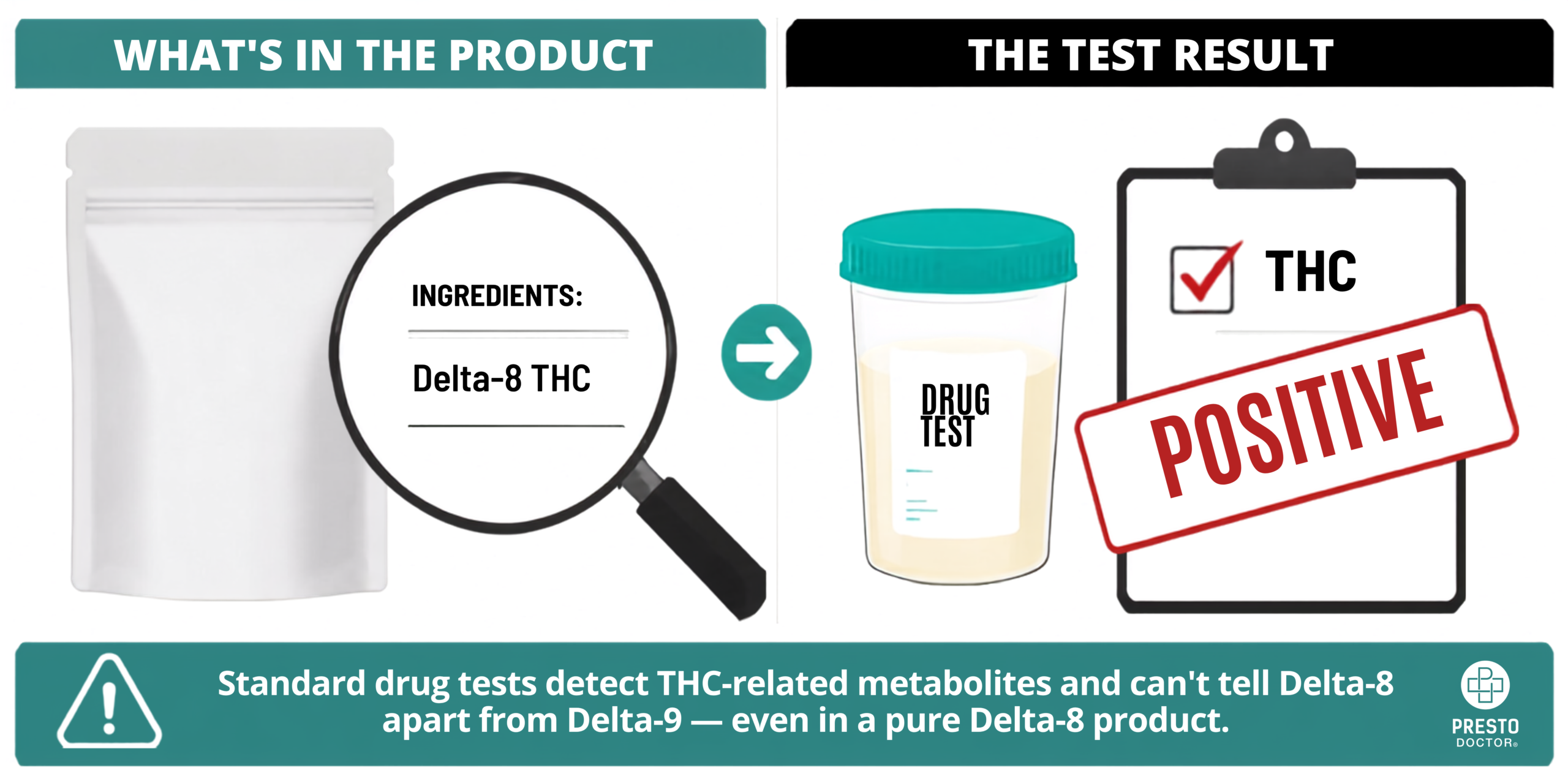
Traditional urine testing flags THC-COOH, an inactive metabolite that stores in body fat and can trigger a positive result weeks after consumption. To abide by modern state laws, progressive agencies are replacing these with Oral Fluid (Saliva) Tests, which check for parent delta-9-THC. Saliva tests feature a tight 12-to-24-hour window, making them a much more accurate indicator of actual workplace impairment rather than weekend lifestyle choices.
Check out our comprehensive guide on Understanding Cannabis Drug Testing Windows.