Quick Summary: While cannabinoids like THC, CBD, and CBG act as the “engine” of your cannabis experience by binding to receptors, terpenes like Myrcene and Limonene act as the “steering wheel,” directing the high toward relaxation or energy. For the most effective results, look for Full-Spectrum products to trigger the Entourage Effect, where these compounds work together to enhance medical benefits.
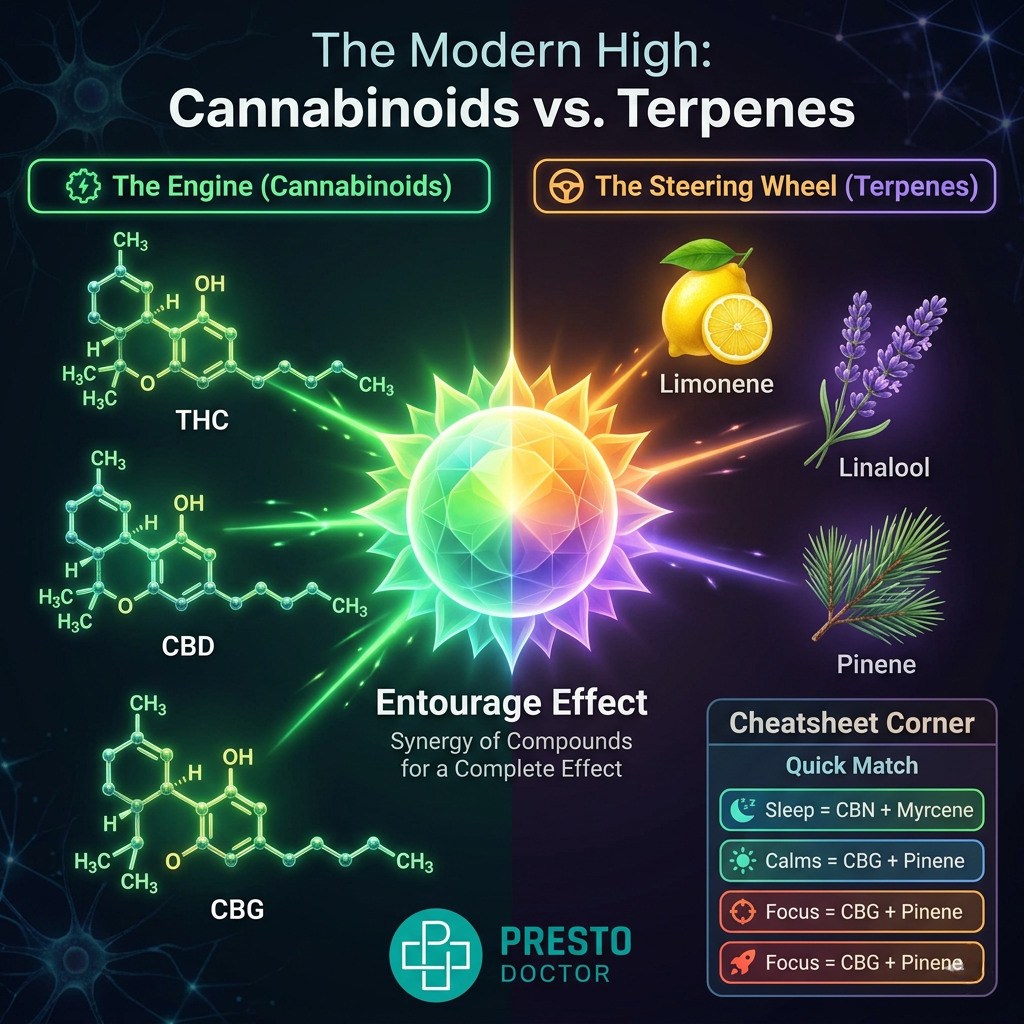
When most patients think of medical cannabis, they focus on THC and CBD. However, the plant’s true therapeutic power lies in the interaction between its two primary chemical families: cannabinoids and terpenes. This synergy is known as the “Entourage Effect”—a phenomenon where the sum of the plant’s parts is more effective than any single compound isolated on its own.
What are Cannabinoids?
Cannabinoids are the “engine” of the cannabis plant. They interact directly with your body’s Endocannabinoid System (ECS) to regulate functions like pain, mood, and sleep.
- THC (The Psychoactive Base): The primary psychoactive compound; effective for pain relief and appetite stimulation.
- CBD (The Balancer): Non-intoxicating; widely used for its anti-inflammatory and anti-anxiety properties.
- CBG (The “Mother” Cannabinoid): Known as the “mother of all cannabinoids”, it shows promise in treating neurological issues.
- CBN (The Sleep Aid): A degraded form of THC known for its sedative properties, especially when paired with specific terpenes.
- THCV (The “Diet Weed”): Gaining popularity for its unique ability to suppress appetite and provide clear-headed energy.
What are Terpenes?
If cannabinoids are the engine, terpenes are the “steering wheel.” These aromatic compounds—found in almost all plants—determine the specific flavor and character of a cannabis strain.
- Limonene: Citrus-scented; often associated with alertness and mood elevation.
- Myrcene: The most common terpene (the “mother of all terpenes”); known for its sedative and anti-inflammatory effects.
- Linalool: Floral-scented; helps buffer THC-induced anxiety.
- Pinene: Sharp and piney; known for promoting mental clarity and alertness.
Understanding the Entourage Effect
The Entourage Effect suggests that terpenes can modulate how cannabinoids affect the brain. Recent research from the University of Arizona suggests some terpenes are cannabimimetic, meaning they mimic or enhance the pain-relieving effects of THC.
| Combination | Target Symptom | Why it Works |
|---|---|---|
| THC + Myrcene | Chronic Pain / Insomnia | Myrcene may increase cell permeability, helping THC cross the blood-brain barrier faster. |
| CBD + Linalool | Anxiety / Stress | Both compounds have calming properties that reinforce each other without intoxication. |
| THC + Pinene | Focus / Memory | Pinene may help mitigate the short-term memory impairment sometimes caused by THC. |
Full-Spectrum vs. Isolate: Why the “Whole Plant” Wins
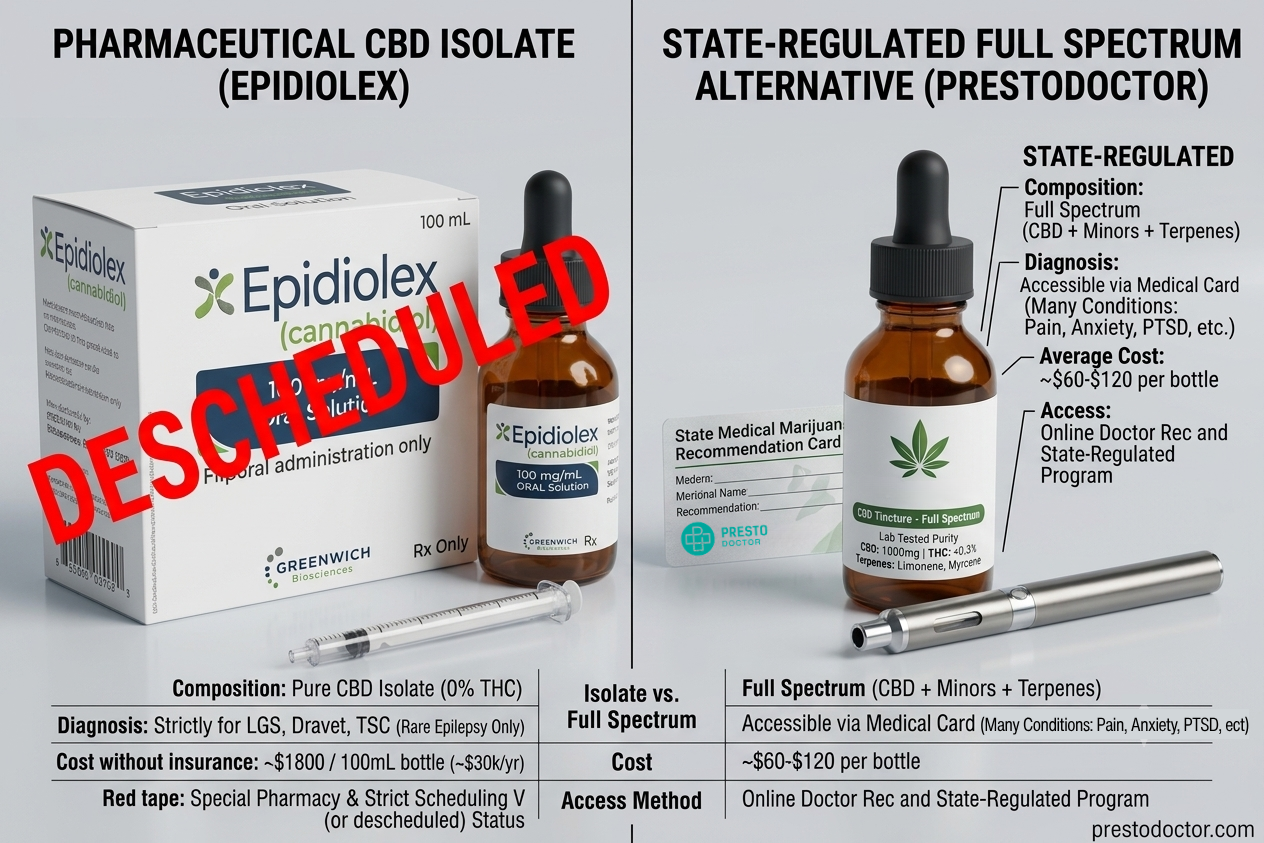
A critical choice for patients is whether to use a Full-Spectrum product or a Cannabinoid Isolate.
- Full-Spectrum: Contains the “whole plant” profile—cannabinoids, terpenes, and flavonoids. This triggers the Entourage Effect, where compounds work synergistically to produce better results than they do alone.
- Isolate: 99% pure single cannabinoid (like CBD Isolate). While useful for those avoiding all THC, it lacks the aromatic “direction” of terpenes and the boosted efficacy of the entourage effect.
Why This Balance Matters for Patients
Modern medical cannabis is about precision. By checking a product’s Certificate of Analysis (COA), you can find the exact ratio of minor cannabinoids and terpenes that fits your needs.
For example, a patient with chronic pain might look for a high-TAC (Total Active Cannabinoid) product rich in both CBD and Myrcene for maximum relief without extreme intoxication.
For medical users, the “high THC” approach isn’t always the best.
- Lower Dosing: By using full-spectrum products (those containing both terpenes and cannabinoids), you may achieve relief with lower doses, reducing the risk of unwanted side effects.
- Tailored Relief: Patients seeking daytime relief should look for “Sativa-leaning” terpenes like Limonene, while those needing sleep should prioritize Myrcene.
- The Third Pillar (Flavonoids): Emerging research also highlights flavonoids (like cannflavins), which contribute to the plant’s overall anti-inflammatory profile alongside terpenes.
| If you want to feel… | Look for these Cannabinoids | Look for these Terpenes |
|---|---|---|
| Focused & Alert | THC + CBG | Pinene, Limonene |
| Deeply Relaxed | THC + CBN | Myrcene, Linalool |
| Clear-Headed/Anti-Anxiety | CBD + THC (1:1) | Caryophyllene |
Do terpenes get you high?
No, but they can accentuate or “steer” the intoxicating effects of THC.
What terpene should I avoid for anxiety?
Some patients find that Terpinolene or Guaiol can occasionally increase heart rate or feelings of unease.
Is THC more important than terpenes?
Not necessarily. While THC determines the potency, terpenes determine the quality of the experience. A lower-THC strain with a rich terpene profile often provides a more pleasant and functional effect than a high-THC strain with no terpenes.
What is the “Entourage Effect”?
The Entourage Effect is the theory that cannabis compounds work better together than in isolation. When cannabinoids and terpenes are consumed together (Full-Spectrum), they balance each other out and increase the therapeutic potential of the plant.
Which minor cannabinoid is best for sleep?
CBN (Cannabinol) is widely considered the best minor cannabinoid for sleep, especially when paired with the terpene Myrcene.
- For deeper terpene science: Link to your 2025 Guide to Cannabis-Derived Terpenes.
- For strain-specific data: Link to the White Widow 2026 Profile.
- For sleep-focused info: Link to How Cannabis Influences Sleep.
Disclaimer: This information is for educational purposes. Always consult with a licensed physician through a service like PrestoDoctor before starting a new medical cannabis regimen.