A new study published in Nature Communications provides some of the strongest evidence to date that cannabis use—specifically exposure to THC—may negatively impact female fertility by damaging egg quality, disrupting gene expression, and increasing chromosomal abnormalities during oocyte maturation. With cannabis use rising among reproductive-age women, understanding the link between cannabis and female fertility is more important than ever. Many women also wonder, can smoking weed make it harder to get pregnant? Can cannabis impact my success with IVF?
This article breaks down what the study found, how THC affects oocytes at the molecular level, and what women trying to conceive should know.
Key Takeaways
- THC exposure accelerates oocyte maturation too quickly, leading to developmental defects.
- Gene expression important for spindle assembly, chromosome separation, and energy production is disrupted.
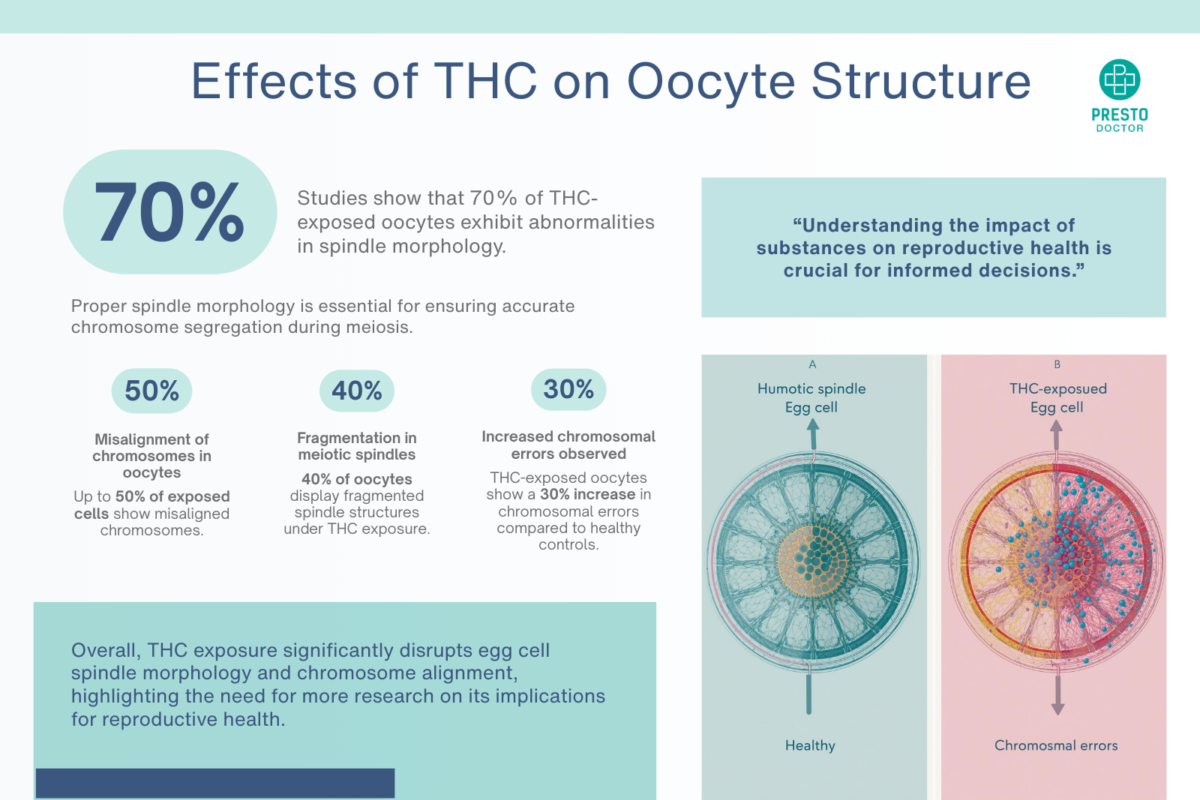
- THC-damaged eggs show abnormal spindle morphology, a major cause of aneuploidy.
- Embryos created from THC-exposed eggs have higher rates of chromosomal abnormalities and reduced viability.
- Fertility experts increasingly recommend avoiding cannabis for 60–90 days before trying to conceive or starting IVF.
THC May Accelerate Egg Maturation — But Not in a Healthy Way
Researchers analyzed oocytes from IVF patients who reported cannabis use and compared them to non-users. They also exposed donated eggs to THC in laboratory conditions. Across both models, THC caused oocytes to mature rapidly but prematurely, pushing them through key stages of meiosis before the cell was properly prepared.
Premature maturation is strongly associated with chromosomal segregation errors, which affect embryo health.
How THC Alters Gene Expression During Oocyte Maturation
One of the most significant findings of the study was the discovery that THC changes expression of genes essential for:
- Microtubule formation, which builds the spindle apparatus
- Chromosome cohesion and segregation
- Mitochondrial ATP production, necessary for the energy-intensive maturation process
- DNA repair and cell cycle regulation
- Meiotic progression, particularly transitions through M-phase
These gene-expression disruptions create a cellular environment where the egg matures quickly but inaccurately, compromising its ability to undergo healthy division.
Spindle Morphology: Why It’s Critical for Healthy Eggs
The meiotic spindle is responsible for pulling chromosomes apart during cell division. A healthy spindle must be symmetrical, stable, and aligned correctly. The study found that THC-exposed oocytes showed:
- Misaligned spindles
- Fragmented spindle structures
- Chromosomes not aligned on the metaphase plate
Defective spindle morphology directly increases the likelihood of aneuploidy—eggs with the wrong number of chromosomes. Aneuploid eggs often fail to fertilize, result in early miscarriage, or lead to arrested embryo development.
THC Increases Chromosomal Abnormalities in Eggs and Embryos
Embryos created from eggs exposed to THC showed:
- Higher rates of chromosomal abnormalities
- Lower blastocyst formation rates
- Reduced embryo quality
Even low concentrations of THC—similar to levels associated with light or moderate cannabis use—were shown to impact egg competency and embryo viability.
What This Means for IVF Patients
The study shows that cannabis does have an impact on IVF. The clinical portion of the study indicates that women undergoing IVF who reported cannabis use had:
- Poorer egg morphology
- Lower maturation rates
- Higher rates of chromosomal abnormalities in resulting embryos
- Reduced success rates in early embryo development
Many clinics now advise patients to avoid cannabis for at least 60–90 days prior to an IVF cycle, since egg quality is determined months before ovulation.
What About Women Trying to Conceive Naturally?
The same cellular mechanisms apply whether conception occurs naturally or through assisted reproduction. THC affects:
- Ovulation and hormonal signaling
- Oocyte quality and maturation
- Early embryo development
- Uterine receptivity
Given these effects, women trying to conceive may wish to avoid cannabis during the preconception window. Additionally, women should avoid cannabis use during pregnancy due to the effects of cannabis on fetal development.
A Note on Male Fertility
It’s also important to remember that fertility is a partnership. The study discussed here focused on oocytes, but research also shows that sperm may also be affected by cannabis.
FAQ: Cannabis Use and Female Fertility
Does cannabis increase the risk of chromosomal abnormalities in eggs?
Yes. The study found significantly higher rates of aneuploidy in eggs and embryos exposed to THC, largely due to spindle defects and disruptions in chromosome-segregation genes.
How long before trying to conceive should women stop cannabis use?
Fertility specialists commonly recommend a 60–90 day window because egg development takes several months. Avoiding THC during this time helps support normal maturation and meiotic integrity.
Is occasional or light cannabis use still harmful to egg quality?
Even low-dose THC exposure showed measurable effects in the study. While more research is needed, current evidence suggests any repeated THC exposure may influence egg development.
Can stopping cannabis use improve fertility?
Yes. Because oocytes develop over several months, improvements in lifestyle—including stopping cannabis use—may positively affect future egg quality.
Can smoking weed make it harder to get pregnant?
Yes, based on the findings published in Nature Communications. The study provides strong evidence that THC disrupts the molecular processes required for healthy egg maturation and increases the risk of chromosomal abnormalities, which can reduce the chances of conceiving naturally or via IVF.
What is the impact of cannabis use on IVF success rates?
The study found that cannabis use was associated with poorer egg morphology, lower maturation rates, and higher rates of chromosomal abnormalities in resulting embryos among IVF patients. This data suggests a negative impact on overall IVF success rates.
Cannabis and Female Fertility: Conclusion
This new research highlights the complex ways THC affects female fertility by disrupting gene expression, damaging spindle structure, accelerating oocyte maturation, and increasing chromosomal errors. For women preparing for pregnancy or IVF, avoiding cannabis may support healthier eggs and also better reproductive outcomes.
Medical Disclaimer: This article is for informational purposes only and does not constitute medical advice. Consult a licensed healthcare professional before making decisions about cannabis use and fertility.