For decades, most medical research around cannabis focused on risks to the developing brain. However, a large 2026 study from the University of Colorado Anschutz, using data from the UK Biobank, identified an unexpected pattern in adults aged 40–77.
Researchers analyzing brain scans and cognitive testing data from over 26,000 participants found that individuals with a history of cannabis use showed larger gray matter volumes and faster processing speeds compared to non-users in the same age group.
Importantly, this was an observational study using existing population data, meaning the findings show correlation rather than proof that cannabis directly improves brain health.
Still, the structural and cognitive patterns observed in this older cohort differed from what has typically been reported in adolescent-focused cannabis research.
Key Takeaways
- Unexpected Brain Structure: A 2026 University of Colorado study of 26,000 adults found that cannabis users aged 40–77 were observed to have larger gray matter volumes in regions linked to memory and emotion.
- Cognitive Performance: Long-term cannabis users demonstrated faster processing speeds compared to non-users, a trend that contrasts sharply with the brain atrophy typically seen in aging alcohol users.
- The Age Factor: Researchers note that the Endocannabinoid System (ECS) plays a role in brain balance as we age, which may be relevant to future investigation of these findings.
The UK Biobank Findings: A Different Pattern in the 40+ Brain
The study compared MRI brain imaging and cognitive task performance between cannabis users and non-users in midlife and older adulthood.
Observed Differences in Processing Speed
On standardized cognitive testing, the cannabis-using group demonstrated faster processing speed than the non-user group.
A Different Connectivity Pattern in the 40+ Brain
Beyond volume differences, researchers observed functional connectivity patterns that differed from typical aging signatures, particularly in pathways between the cerebellum and subcortical regions— connections that often weaken with age.
Separate Emerging Research: Cannabinoids and Alzheimer’s Pathology
While the CU Anschutz study examined population-level brain structure and cognition, separate preclinical research is investigating how cannabinoids interact with neurodegenerative disease processes.
A study published in Aging and Disease by researchers at UT Health San Antonio explored how THC interacts with beta-amyloid plaques in laboratory models.
The Plaque Hypothesis
In animal and cellular models, THC has demonstrated a capacity to assist in clearing beta-amyloid proteins, which are a hallmark of Alzheimer’s disease.
The Synergy Approach with Celecoxib
Researchers are investigating whether pairing low-dose THC with Celecoxib (an anti-inflammatory medication) can reduce the localized inflammation THC may trigger while preserving its plaque-clearing effects.
Because both substances are already FDA-approved, this pathway is considered a high-interest target for future human clinical trials. These findings are still preclinical and not yet validated in large human studies.
Cannabis vs. Alcohol: A Notable Contrast in Aging Research
Decades of neurological research consistently link alcohol consumption in older adults to brain atrophy and cognitive decline.
In contrast, the cannabis-using group in the UK Biobank analysis did not show the smaller brain volumes often reported in alcohol research.
This contrast has drawn attention from researchers studying lifestyle factors that may influence brain aging, though causation has not been established.
Unlike alcohol, which is a known neurotoxin, current research examines whether cannabis ‘kills’ brain cells or simply modifies how they communicate.
Critical Nuance: What the Study Did Not Prove
To understand these findings accurately, it is essential to recognize the study’s limitations.
Association, Not Causation
The study cannot determine whether cannabis caused the larger brain volumes. It is possible that individuals with certain brain characteristics are more likely to use cannabis.
The Posterior Cingulate Finding
Not all results were uniformly positive. Cannabis users showed lower volume in the posterior cingulate, a region involved in attention and memory. Researchers are still investigating whether this represents a risk, a neutral difference, or a functional adaptation.
No Dose or Product Data
Because the study relied on self-reported lifetime use, it did not measure:
- THC vs CBD content
- Dosage
- Frequency of use
- Method of consumption
Sex-Based Differences: How Men and Women Age Differently with Cannabis
The analysis in the Journal of Studies on Alcohol and Drugs revealed that these associations were not uniform across all demographics. Researchers observed that the relationship between cannabis use and brain structure differed between men and women, suggesting that hormonal or biological differences may dictate how the aging brain responds to cannabinoids. This underscores the need for personalized approaches in future geriatric cannabis research.
People Also Ask
Does cannabis use lead to larger brain volume in seniors?
A 2026 University of Colorado study found a significant association between lifetime cannabis use and larger gray matter volumes in adults aged 40–77. While this suggests a pattern of larger gray matter volumes, it is a correlational finding and does not prove direct causation.
How does cannabis compare to alcohol regarding brain aging?
While alcohol is consistently linked to brain atrophy (shrinkage) in older adults, the UK Biobank data showed that cannabis users in the same age group did not display these shrinkage patterns. In fact, many users showed larger volumes in regions associated with memory and motor function compared to non-users.
Do men and women respond differently to cannabis as they age?
Yes. Researchers found that the relationship between cannabis use and brain structure varied by biological sex. These differences suggest that hormonal or physiological factors may influence how cannabinoids interact with the aging brain, highlighting the need for personalized geriatric research.
Can THC help prevent Alzheimer’s disease?
Preclinical research from UT Health San Antonio indicates that low-dose THC may help clear beta-amyloid plaques. To mitigate the localized inflammation THC can cause, researchers are studying a “synergy approach” pairing it with Celecoxib. Human clinical trials are the next step to validate these laboratory findings.
What does lower posterior cingulate volume in cannabis users mean?
While most findings were positive, cannabis users showed lower volume in the posterior cingulate, a region involved in internal awareness and memory. Scientists are still investigating whether this is a potential risk or a functional adaptation related to how the brain processes information more efficiently.
Beyond Correlation: The Future of Geriatric Cannabinoid Clinical Trials
The most important takeaway from this research is not that cannabis is “good for the brain,” but that the patterns observed in older adults differ from those commonly reported in adolescent cannabis research.
This opens new research pathways into how the endocannabinoid system may influence brain structure, cognition, and neurodegeneration later in life.
What were the results of the THC and Celecoxib Alzheimer’s study?
Preclinical research published in Aging and Disease by UT Health San Antonio found that low-dose THC helped reduce beta-amyloid plaques in laboratory models of Alzheimer’s disease. However, THC also triggered localized inflammation. Researchers discovered that pairing THC with Celecoxib, an anti-inflammatory medication, reduced this inflammatory response while preserving the plaque-clearing effect. These findings are promising but have not yet been confirmed in large human clinical trials.
What does lower posterior cingulate volume in cannabis users mean?
The University of Colorado Anschutz study found that cannabis users over 40 showed lower volume in the posterior cingulate compared to non-users. This brain region plays a role in attention, memory, and internal awareness. Researchers are still investigating whether this difference represents a potential risk, a neutral variation, or a functional adaptation related to cognitive processing efficiency.
Why might cannabis affect older brains differently than younger brains?
Adolescent brains undergo a process called synaptic pruning, where unused neural connections are removed. Cannabis use during this stage may disrupt that process. In contrast, the aging brain is experiencing gradual neural loss.
Which brain regions were larger in cannabis users over 40?
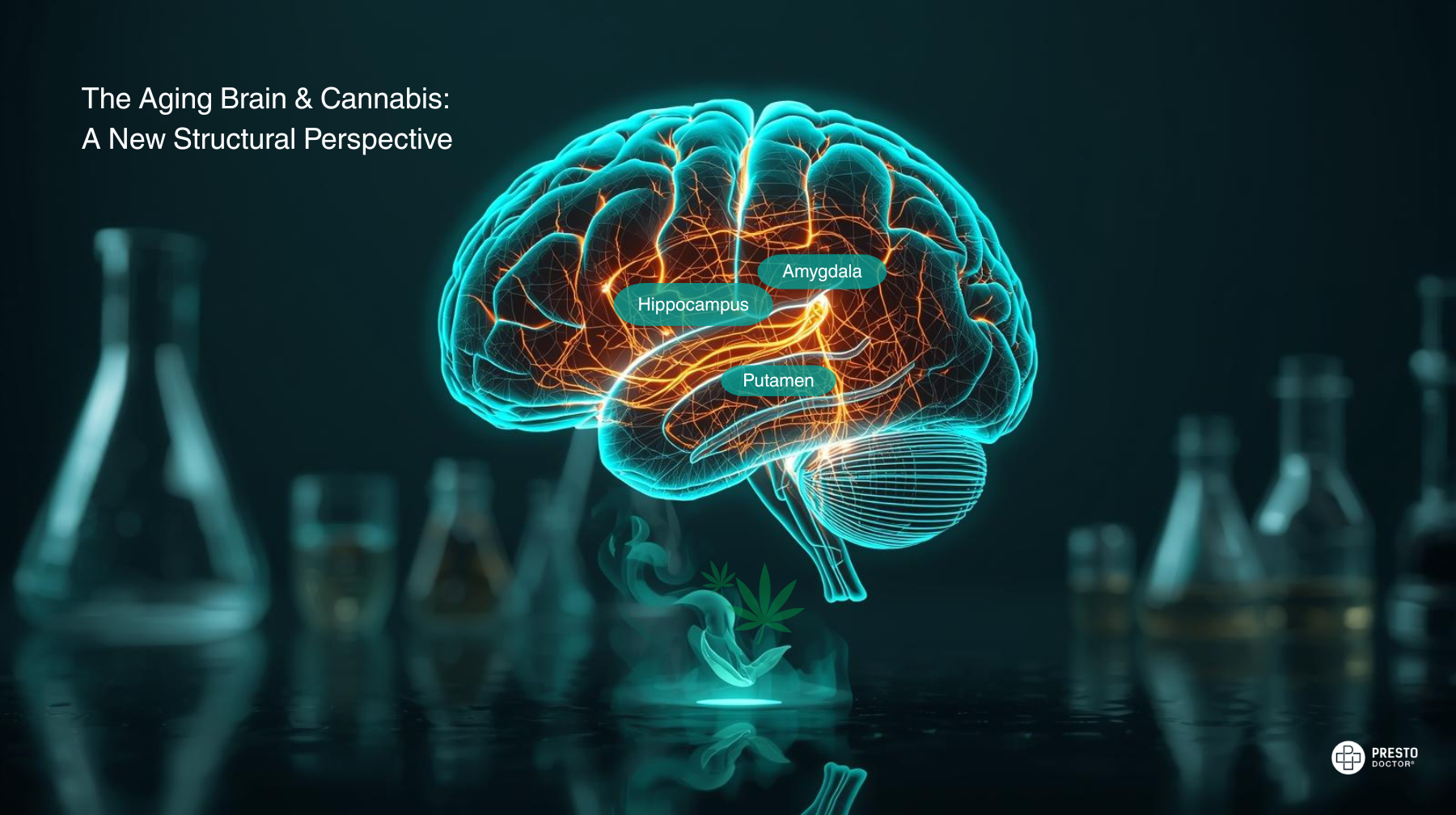
The study observed larger gray matter volumes in the hippocampus, amygdala, and putamen among cannabis users aged 40–77. These regions are associated with memory, emotion regulation, and motor learning. Researchers emphasize that this is an observational finding and does not prove cannabis directly caused these differences.
Is there a connection between cannabis, gray matter, and processing speed?
Participants with a history of cannabis use not only showed larger gray matter volumes but also performed faster on processing speed tasks. While researchers cannot confirm a causal link, the combination of structural and cognitive differences has drawn attention from neuroscientists studying brain aging.
Looking Ahead: The Future of Geriatric Cannabinoid Research
The CU Anschutz and UT Health findings represent a shift in how we view the aging brain’s relationship with cannabis. As researchers move toward human clinical trials for THC-anti-inflammatory pairings and deeper analysis of the UK Biobank’s 500,000-person database, we may soon move from observing correlations to understanding the mechanisms behind these observed associations.
Disclaimer
This article is for informational purposes only and does not constitute medical advice. Always consult a healthcare professional before beginning any cannabinoid use, especially if you have existing medical conditions or take prescription medications.