Last Updated: September 14, 2026
The marijuana ER testing bill currently making headlines does not require every hospital to test patients for marijuana. The legislation drawing attention is Tyler’s Law (H.R. 2004), a federal proposal focused primarily on fentanyl testing in hospital emergency departments.
The current House version directs the U.S. Department of Health and Human Services (HHS) to study how frequently emergency departments test for fentanyl in addition to other substances, specifically naming amphetamines, phencyclidine (PCP), cocaine, opiates, and marijuana, when a patient is experiencing an overdose.
A separate proposal, the Marijuana Impact on Medicaid Act of 2026 (S. 4345), would require HHS to collect data on Medicaid spending associated with inpatient hospital services, outpatient hospital services, and hospital emergency-room services related to marijuana use.
As of September 14, 2026, neither proposal creates a nationwide federal requirement for hospitals to automatically test every emergency-room patient for marijuana.
The U.S. House currently lists H.R. 2004, Tyler’s Law, among legislation that may be considered under suspension of the rules during the week of September 14. The measure previously cleared the House Energy and Commerce Committee by a 46–0 vote. Meanwhile, the Senate already passed its version of Tyler’s Law, S. 921, in March, while S. 4345 remains an introduced Senate bill referred to the Senate Finance Committee.
Quick answer: The 2026 marijuana emergency room testing bill is not a federal mandate requiring all hospitals to test every patient for cannabis. Tyler’s Law is primarily about studying and potentially improving fentanyl testing in emergency departments for overdose patients.
Tyler’s Law vs. the Marijuana Impact on Medicaid Act of 2026
| Bill | Main Focus | Does It Mention Marijuana? | Requires Universal Marijuana Testing? | Current Status | Federal Agency Involved |
|---|---|---|---|---|---|
| H.R. 2004 – Tyler’s Law | HHS study of emergency-department fentanyl testing and later guidance | Yes. The current House text specifically names marijuana among other substances emergency departments may test for during overdose cases. | No | Passed the House Energy and Commerce Committee 46–0 and is listed for possible House consideration during the week of September 14, 2026. | U.S. Department of Health and Human Services |
| S. 921 – Tyler’s Law | HHS study and guidance focused on fentanyl testing for overdose patients | Not specifically in the Senate-passed text. | No | Passed the Senate by unanimous consent on March 23, 2026. | U.S. Department of Health and Human Services |
| S. 4345 – Marijuana Impact on Medicaid Act of 2026 | Collect data on Medicaid spending associated with marijuana-related hospital and emergency-room services | Yes. Marijuana use is the subject of the proposed spending study. | No | Introduced in the Senate and referred to the Senate Finance Committee. | U.S. Department of Health and Human Services |
Legislative status can change quickly. This article reflects the status available on September 14, 2026.
At a Glance
Does Tyler’s Law require marijuana testing? No.
What is the bill mainly about? Fentanyl testing in emergency departments.
Why is marijuana mentioned? The current House version asks HHS to study fentanyl testing alongside other substances, including marijuana.
Has Tyler’s Law become law? No.
Has the Marijuana Impact on Medicaid Act become law? No.
Does Tyler’s Law Require Hospitals to Test for Marijuana?
No. Tyler’s Law does not currently require every hospital in the United States to test every emergency-room patient for marijuana.
The federal legislation is primarily focused on fentanyl testing for patients experiencing an overdose. In the current House version, HHS would study how frequently hospital emergency departments test for fentanyl in addition to other substances such as amphetamines, phencyclidine (PCP), cocaine, opiates, and marijuana.
That distinction is important because the phrase “marijuana ER testing bill” can make the legislation sound like Congress has created a nationwide cannabis-testing mandate. It has not.
Instead, the current House proposal would require HHS to examine emergency-department testing practices, the costs and potential benefits and risks of fentanyl testing, and the impact of testing on patient privacy and the patient-physician relationship.
After completing the study, HHS would be required to issue guidance addressing whether hospital emergency departments should implement routine fentanyl testing for patients experiencing an overdose.
Bottom line: Tyler’s Law does not create a new federal rule requiring every ER to automatically test patients for marijuana.
What Is Tyler’s Law? (H.R. 2004 / S. 921)
Tyler’s Law is the name used for federal legislation addressing fentanyl testing in hospital emergency departments.
There are two congressional versions to understand:
- H.R. 2004 is the House version.
- S. 921 is the Senate version, which the Senate passed on March 23, 2026.
The bill is intended to address a specific problem in emergency medicine: some routine drug screens may not include fentanyl, even when a patient is being treated for a suspected drug overdose.
Rather than immediately imposing a universal fentanyl-testing requirement, Tyler’s Law directs HHS to study existing testing practices and determine whether routine fentanyl testing should become standard for overdose patients.
The Senate passed S. 921 by unanimous consent after an amendment. The Congressional Budget Office describes the Senate-passed bill as directing HHS to study whether hospital emergency departments should routinely conduct fentanyl testing on patients who arrive for drug-overdose treatment, including an assessment of costs, benefits, risks, staff-training needs, available resources, and implementation barriers.
Read the Senate-passed version of S. 921 on GovInfo.
What Would Tyler’s Law Actually Do?
The answer depends on which version of the legislation you are looking at.
What the Current House Version Would Do
The current House text would require HHS to complete a study within one year after enactment.
The study would examine:
- How frequently hospital emergency departments test for fentanyl when a patient is experiencing an overdose.
- How often fentanyl testing occurs alongside testing for other substances, including marijuana, cocaine, opiates, amphetamines, and PCP.
- The costs associated with fentanyl testing.
- The potential benefits and risks to patients.
- How fentanyl testing may affect patient privacy, confidentiality, and the patient-physician relationship.
After completing the study, HHS would have six months to issue guidance based on its findings.
That guidance would address whether emergency departments should implement routine fentanyl testing for overdose patients, how hospitals can ensure clinicians know which substances their drug tests actually detect, and how fentanyl testing may affect future overdose risk and broader health outcomes.
Read the current House text of H.R. 2004.
What the Senate-Passed Version Would Do
The Senate-passed version also focuses on fentanyl testing and HHS guidance, but it differs from the current House text. One important difference is that the current House text specifically names marijuana among the substances included in its study of emergency-department testing practices, while the Senate-passed version does not specifically name marijuana.
The Congressional Budget Office says S. 921 would direct HHS to study whether hospital emergency departments should routinely conduct fentanyl testing of overdose patients and evaluate the costs, benefits, risks, staff-training needs, resources, and barriers involved.
The Senate-passed version is therefore important to keep separate from the House text when describing what the federal legislation says today.
Why Is Marijuana Mentioned in Tyler’s Law?
This is where much of the confusion around the marijuana testing in emergency rooms question comes from.
In the current House version, marijuana is listed as one of the substances that may already be included in emergency-department drug testing when a patient is experiencing an overdose.
The House language asks HHS to determine how frequently hospitals test for fentanyl in addition to testing for other substances, including marijuana.
In other words, the bill is asking a broader question about what emergency departments are testing for now.
It is not saying that the federal government has decided every ER must begin testing every patient for marijuana.
Important distinction: Marijuana appears in the House bill as part of the list of substances considered in the study of existing overdose-testing practices. That is different from creating a nationwide marijuana-testing requirement.
The House version also keeps the study centered on fentanyl, including the costs and risks of fentanyl testing and its potential effect on patient privacy and the patient-physician relationship.
What Is the Marijuana Impact on Medicaid Act? (S. 4345)
The Marijuana Impact on Medicaid Act of 2026 is a separate piece of federal legislation and should not be confused with Tyler’s Law.
Sen. Ted Budd introduced S. 4345 on April 20, 2026, with Pete Ricketts as an original cosponsor. The bill was referred to the Senate Committee on Finance.
Its purpose is to have HHS collect data about federal and state Medicaid expenditures attributable to:
- Inpatient hospital services
- Outpatient hospital services
- Hospital emergency-room services
The bill would then require HHS to submit a report to Congress and make the report publicly available within one year after enactment, including findings from the data collection and any recommendations for legislation or administrative action.
Has the Marijuana Impact on Medicaid Act Passed?
No.
As of September 14, 2026, S. 4345 is an introduced Senate bill. Its latest listed action is April 20, 2026, when it was referred to the Senate Finance Committee.
That means it is not a federal law, and it does not currently impose a requirement on hospitals, emergency departments, Medicaid programs, or patients.
This is another important distinction when reading headlines about the marijuana Medicaid bill 2026. A bill being introduced is not the same thing as a bill being enacted.
Tyler’s Law vs. the Marijuana Impact on Medicaid Act
Although both proposals involve marijuana-related questions and hospital care, they approach the issue very differently.
Tyler’s Law is centered on emergency-department drug testing, particularly the question of routine fentanyl testing for overdose patients. The current House version mentions marijuana because HHS would examine how fentanyl testing fits into broader emergency-room drug-testing practices.
The Marijuana Impact on Medicaid Act is focused on government spending. It would have HHS collect data on Medicaid costs associated with hospital and ER services related to marijuana use.
Neither bill currently establishes a universal federal rule requiring hospitals to test all patients for marijuana.
Will Hospitals Start Testing Everyone for Marijuana?
Not because of Tyler’s Law.
The current House bill does not instruct hospitals to test every ER patient for marijuana.
It directs HHS to study existing emergency-department testing practices and the potential use of routine fentanyl testing for overdose patients.
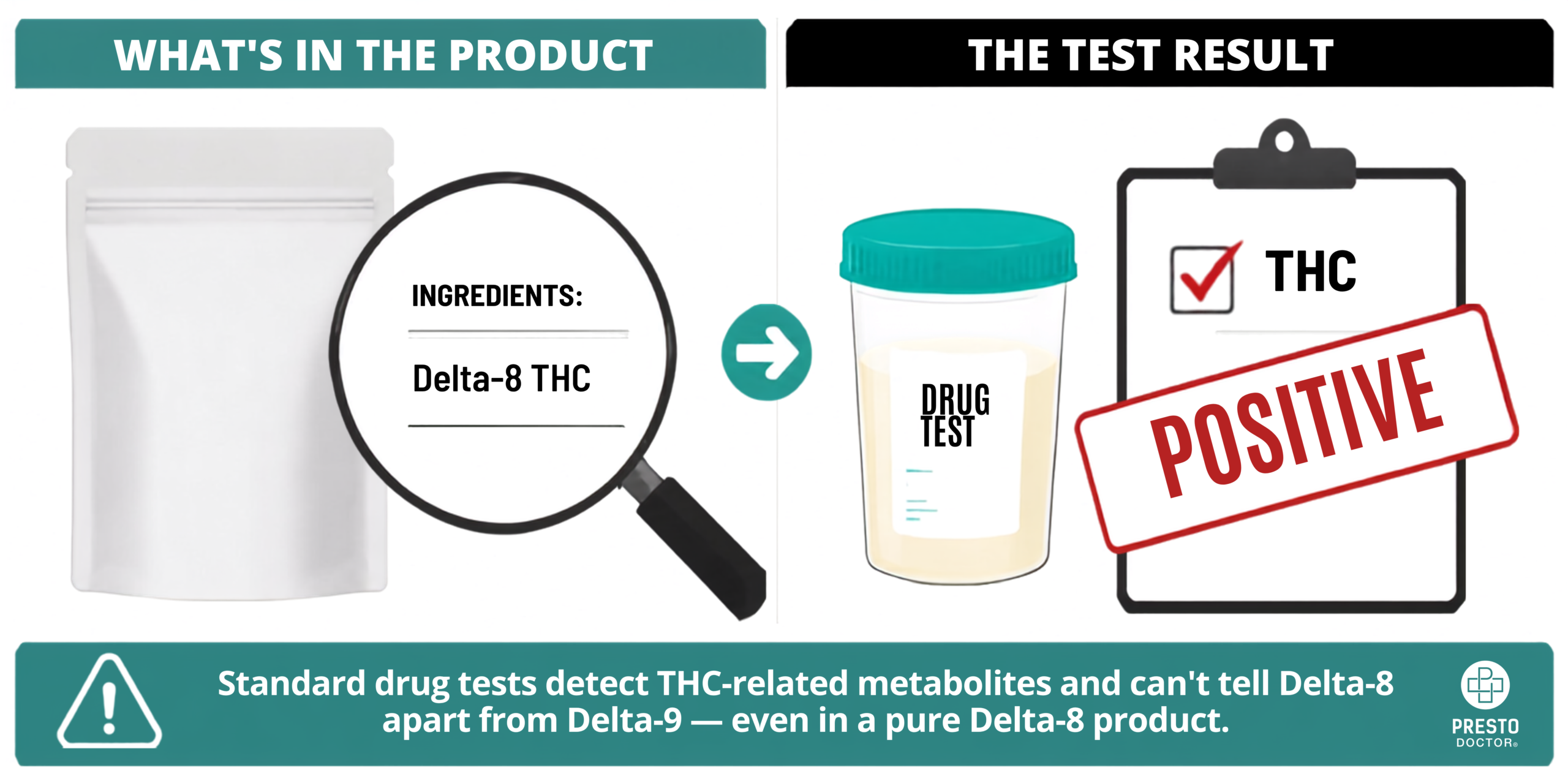
Hospital testing decisions can depend on the patient’s medical circumstances, suspected substance exposure, the facility’s protocols, the clinical judgment of the healthcare team, and the specific laboratory tests being used. For more information about how cannabinoid testing can produce different results depending on the substance and test, see our guide to whether Delta-8 shows up on a drug test.
That means the phrase “hospital drug testing marijuana” should not be interpreted as evidence that a new nationwide policy is already in place.
What Does This Mean for Medical Marijuana Patients?
For medical marijuana patients, the key takeaway is that Tyler’s Law does not currently create a new federal requirement for every ER patient to be tested for marijuana.
Having a medical marijuana card also does not automatically determine whether a hospital will order a toxicology test.
A medical cannabis card is generally connected to authorization under a state’s medical cannabis program, while a hospital toxicology test is a clinical tool used by healthcare professionals for purposes such as evaluating possible poisoning, intoxication, overdose, or other medical concerns.
Medical cannabis rules vary significantly by state. Patients should therefore avoid assuming that one federal legislative proposal changes the medical-marijuana rules in every state.
For state-specific information, visit the PrestoDoctor state directory.
Patients considering medical cannabis can also learn more about the process in How to Choose a Medical Marijuana Doctor Before You Book and The Medical Marijuana Evaluation Process.
Important: This article discusses federal legislation and general information. It is not legal or medical advice. State laws, hospital policies, and clinical decisions can vary.
What the Bill Does Not Mean
Some headlines and social-media posts can make the legislation sound broader than it actually is.
Tyler’s Law does not mean:
- Every hospital must test every patient for marijuana.
- Every emergency-room patient will automatically receive a cannabis drug test.
- Medical marijuana patients are being placed under a new nationwide testing requirement.
- HHS has already ordered hospitals to add marijuana testing to routine ER panels.
- S. 4345 has already become law.
What the current legislation does is much narrower: it addresses the study of emergency-department drug-testing practices, particularly fentanyl testing, and separately proposes collecting data on Medicaid spending related to marijuana-associated hospital care.
What Happens Next?
As of September 14, 2026, H.R. 2004 appears on the U.S. House’s list of legislation that may be considered under suspension of the rules during the week of September 14.
That wording matters. The House schedule does not say that the bill is guaranteed to receive a vote on a particular day. It identifies H.R. 2004 as a measure that may be considered.
If the House takes action, the legislative process is not necessarily finished. The House and Senate versions of Tyler’s Law are not identical, so additional congressional action would still be necessary before a final measure could become law.
Current status: Tyler’s Law is still proposed legislation. It has not created a nationwide federal marijuana-testing requirement for emergency rooms.
Check the current U.S. House floor schedule.
2026 Timeline
| Date | What Happened |
|---|---|
| March 10, 2025 | H.R. 2004, Tyler’s Law, was introduced in the House. |
| March 23, 2026 | The Senate passed S. 921, Tyler’s Law, with an amendment by unanimous consent. |
| April 20, 2026 | S. 4345, the Marijuana Impact on Medicaid Act of 2026, was introduced and referred to the Senate Finance Committee. |
| July 21, 2026 | The House Energy and Commerce Committee favorably reported H.R. 2004 by a 46–0 vote. |
| September 14, 2026 | H.R. 2004 is listed among legislation that may be considered under suspension of the rules during the House legislative week. |
Frequently Asked Questions About the Marijuana ER Testing Bill
What is Tyler’s Law?
Tyler’s Law is federal legislation focused on fentanyl testing in hospital emergency departments. The House version is H.R. 2004, while the Senate-passed version is S. 921. The legislation directs HHS to study emergency-department fentanyl testing and develop guidance concerning whether routine fentanyl testing should be used for patients experiencing an overdose.
Does Tyler’s Law require hospitals to test for marijuana?
No. Tyler’s Law does not establish a nationwide requirement for hospitals to test every emergency-room patient for marijuana. Marijuana appears specifically in the current House text as one of the substances considered in the study of emergency-department testing practices during overdose cases.
What is the Marijuana Impact on Medicaid Act of 2026?
S. 4345 is a separate Senate proposal that would require HHS to collect and report data on Medicaid spending associated with hospital and emergency-room services related to marijuana use. It has not become law.
Will hospitals start testing everyone for marijuana?
Not because of Tyler’s Law. The legislation does not create a universal federal marijuana-testing requirement for emergency rooms. Hospital testing can still depend on clinical circumstances, hospital protocols, and the tests ordered by the healthcare team.
Is there a new federal marijuana testing law in 2026?
No federal law enacted in 2026 has created a nationwide requirement for every emergency room to test every patient for marijuana under Tyler’s Law. As of September 14, 2026, H.R. 2004 remains proposed legislation being considered by Congress.
Related PrestoDoctor Resources
If you’re researching how drug testing works or what medical marijuana rules mean for patients, these PrestoDoctor resources may also be useful:
- How to Choose a Medical Marijuana Doctor Before You Book
- The Medical Marijuana Evaluation Process
- Does Delta-8 Show Up on a Drug Test?
- How Long Does THC Stay in Urine?
- PrestoDoctor State Directory
Sources and Official Records
This article is based primarily on federal legislative records and government sources. Because legislation can change quickly, readers should verify the latest congressional status before relying on this article for time-sensitive information.
- U.S. House of Representatives — House Floor Schedule
- U.S. House — H.R. 2004, Tyler’s Law
- U.S. Government Publishing Office — S. 921, Tyler’s Law
- Congressional Budget Office — S. 921
- U.S. Government Publishing Office — S. 4345, Marijuana Impact on Medicaid Act of 2026
- U.S. Senate — March 23, 2026 Floor Activity
Medical Disclaimer
This article is for educational and informational purposes only. It is not a substitute for medical, legal, employment, or toxicology advice. Federal and state laws can change, and hospital testing policies may vary by facility and clinical circumstances.
Learn more about medical marijuana evaluations with PrestoDoctor.